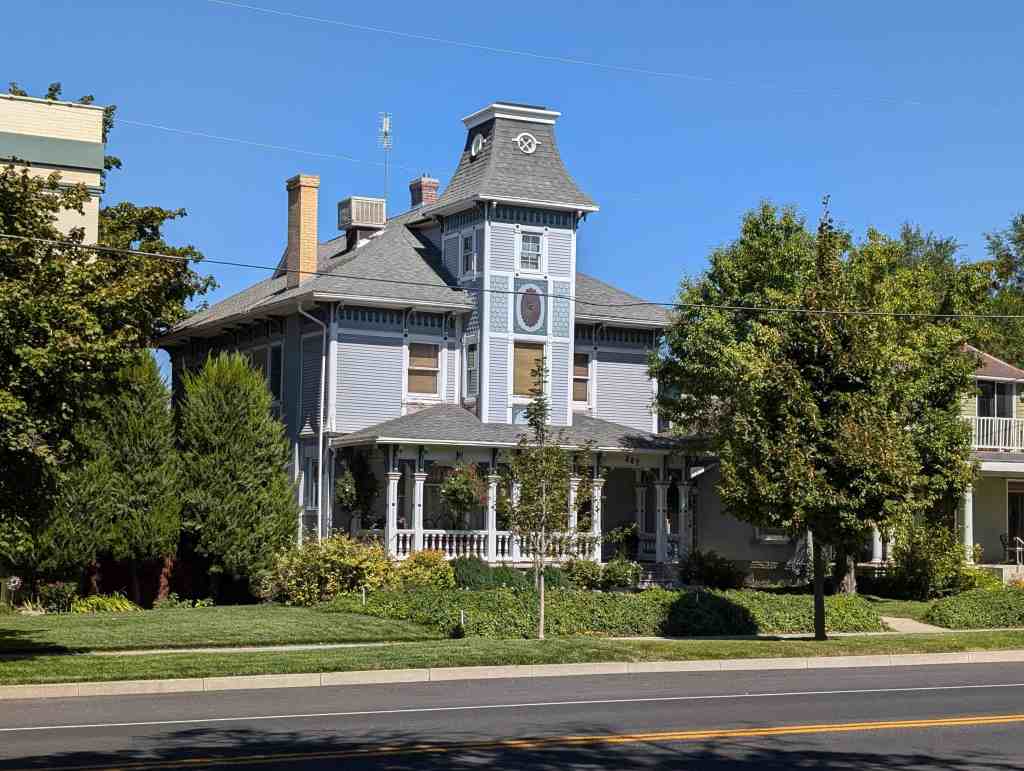
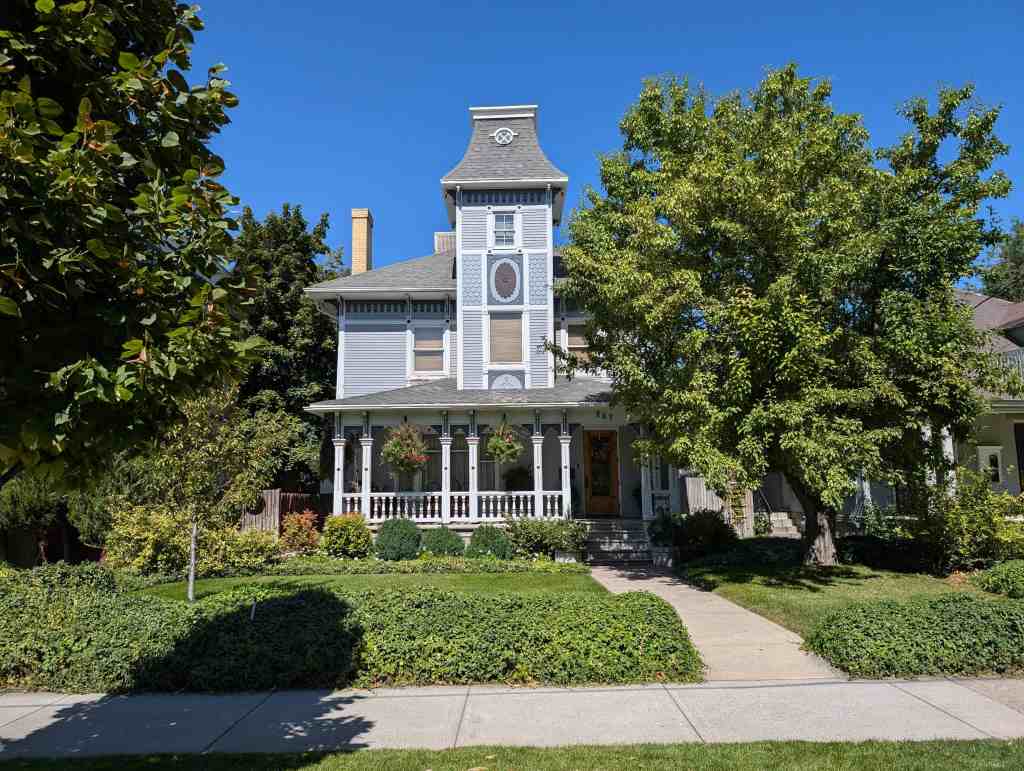
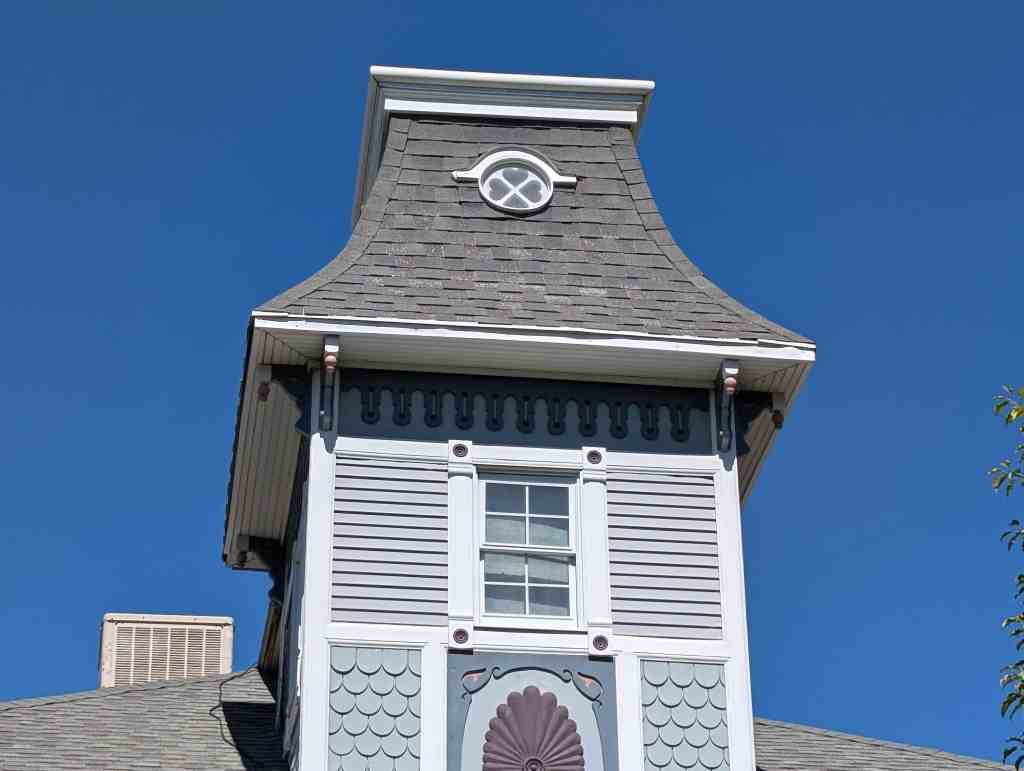
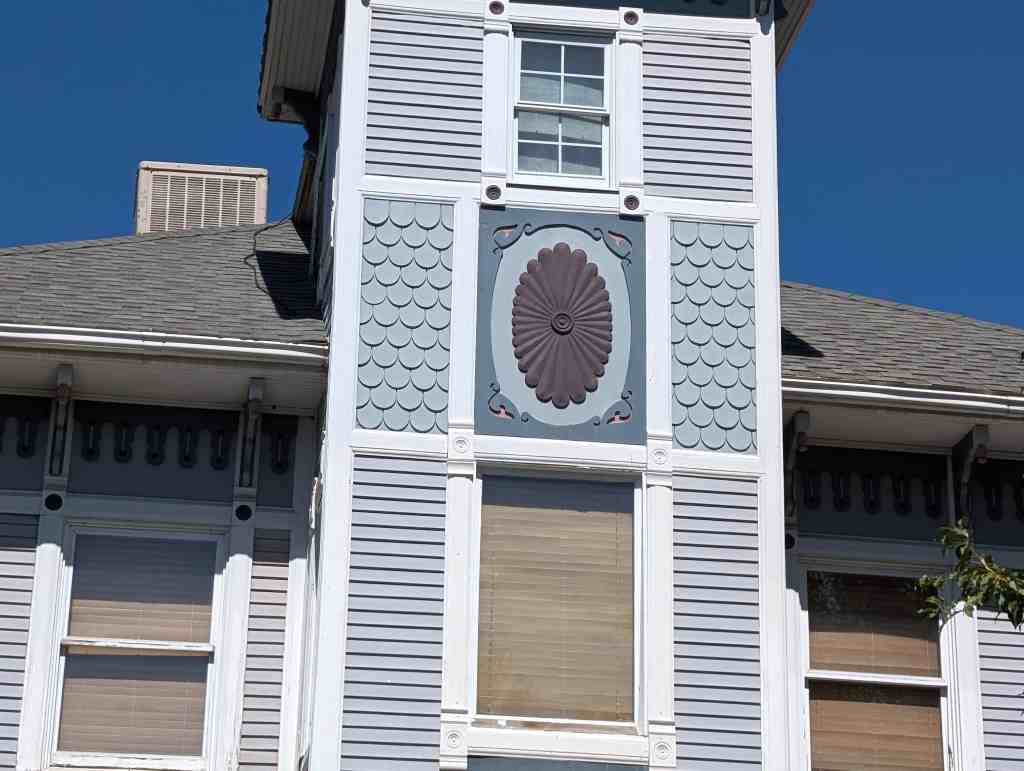
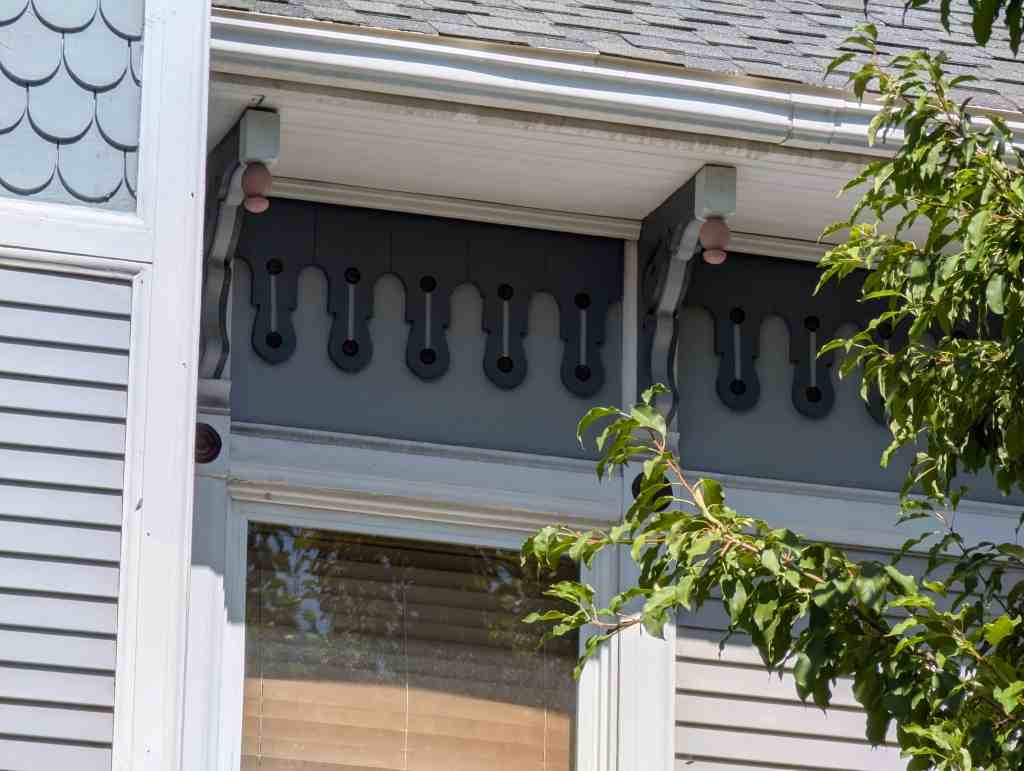
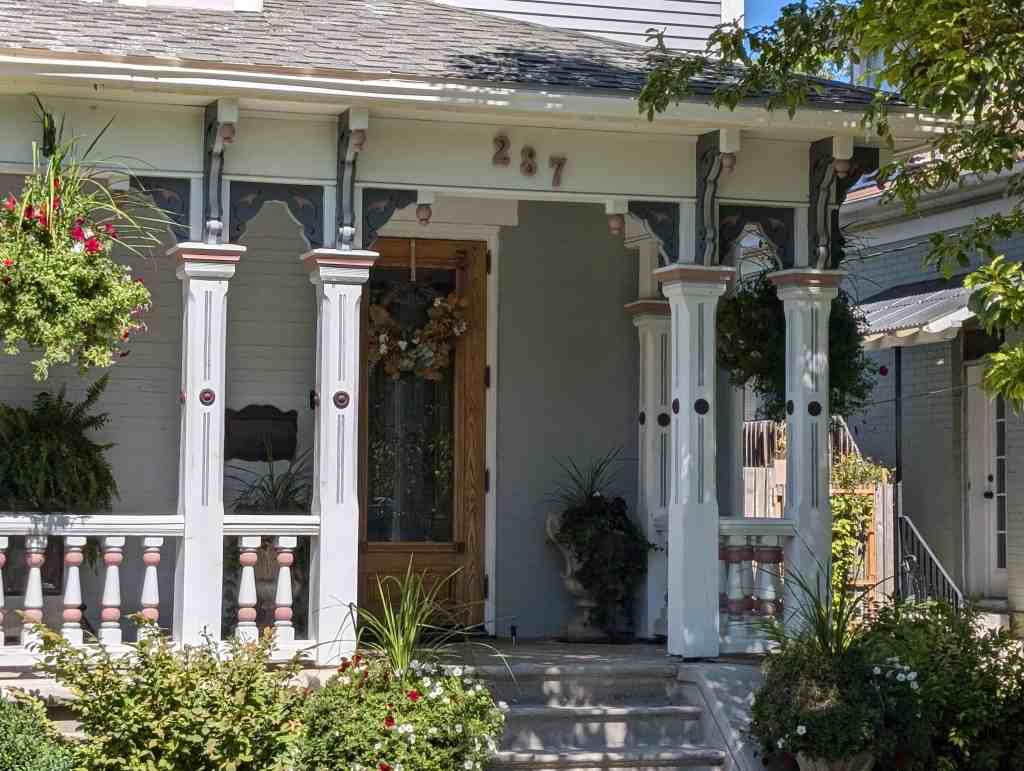
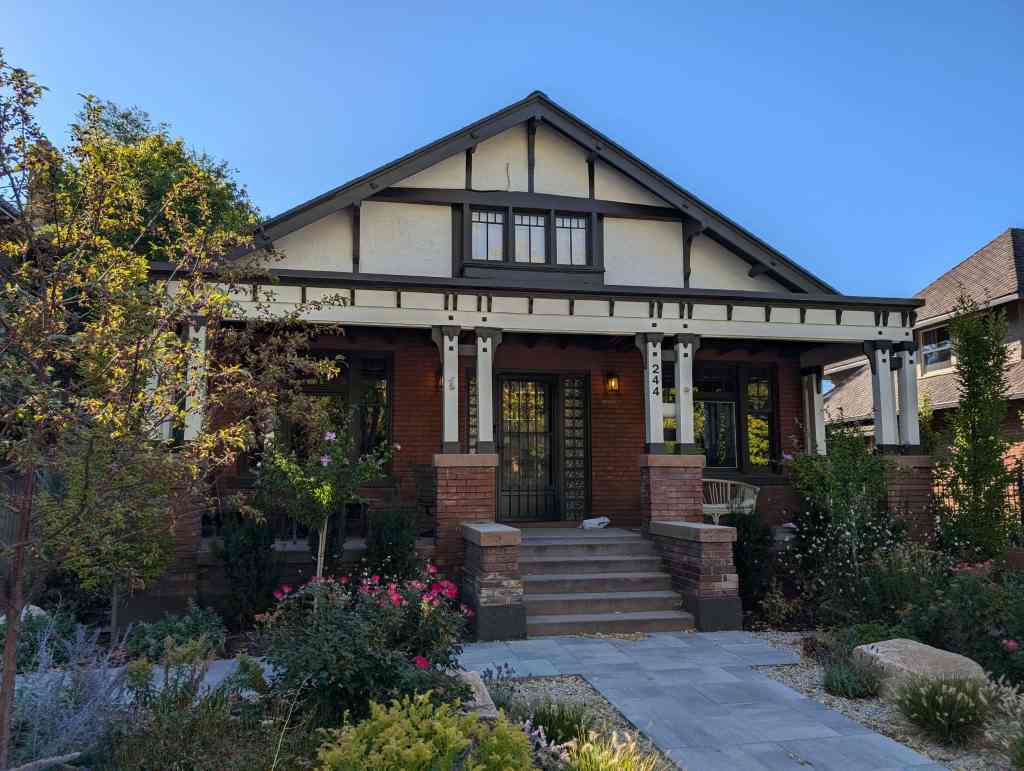
Mr. Bowen built this two-story home in 1909. He was the manager of Logan-Idaho Oil and Gas Co. The house was converted to apartments for a short time, but present owners are restoring its Victorian style as a single family dwelling.*
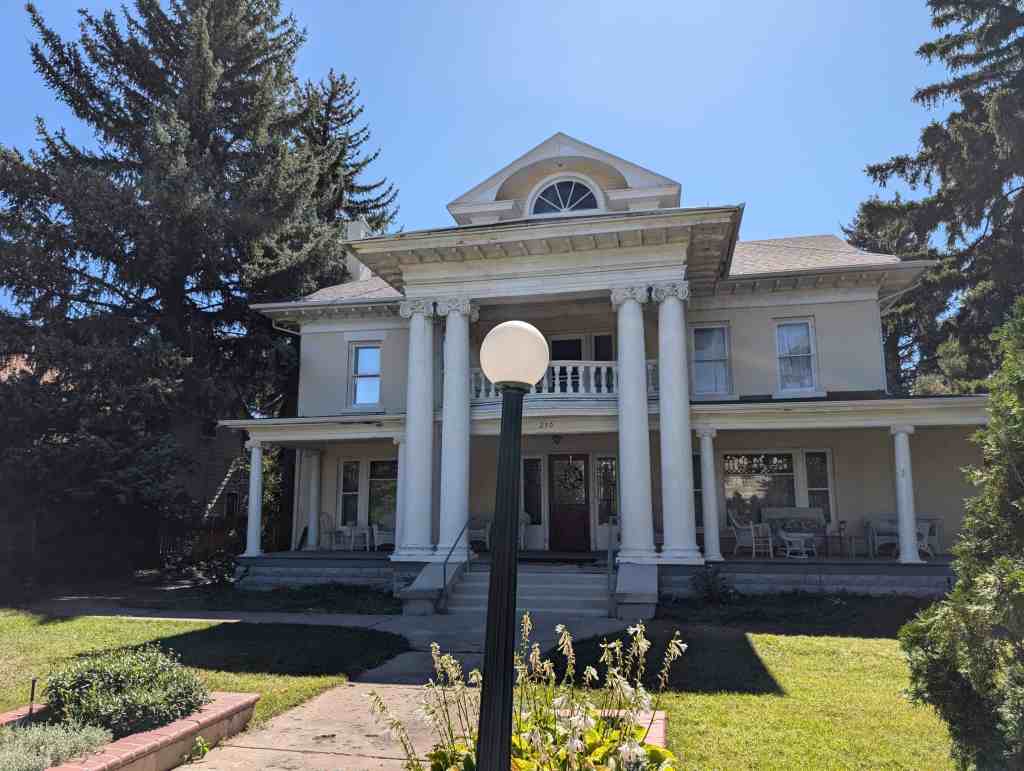
Charles W. Nibley built this home in 1905 for his second wife, Ellen Ricks Nibley. The home, described as Neoclassical, has a cluster of three 2-story Ionic columns on each side of the portico, reminiscent of Jefferson Classicism. The first-story veranda wraps around one side of the home and is supported by Ionic columns. A classic balustrade encircles the second-story veranda. The fan window in the front gable is typical of the style and is the crowning feature of the façade.
The home was used as a fraternity house until 1963, when Mr. and Mrs. Ray Somers purchased the home. Over a period of 20 years, they restored the grand structure and changed the interior to a fancy 1905-era style with some Georgian and Colonial Revival touches. They added the garage, woodwork, numerous stained glass windows, and a unique and beautiful French parlor. There is also a Grecian library, a classical pillar section at the head of the stairway, a fancy hutch over the radiators on the second floor, luxurious Victorian carpeting, and hardwood parquet floors.
Cache Valley black walnut was used in the upstairs bathroom, front foyer, and other parts of the home. The woodwork in the hall and dining room is stained Italian cherry to match the mantle in the parlor. All woodwork, millwork, electrical, plumbing, plaster castings, painting, and design were done by the Somers.*
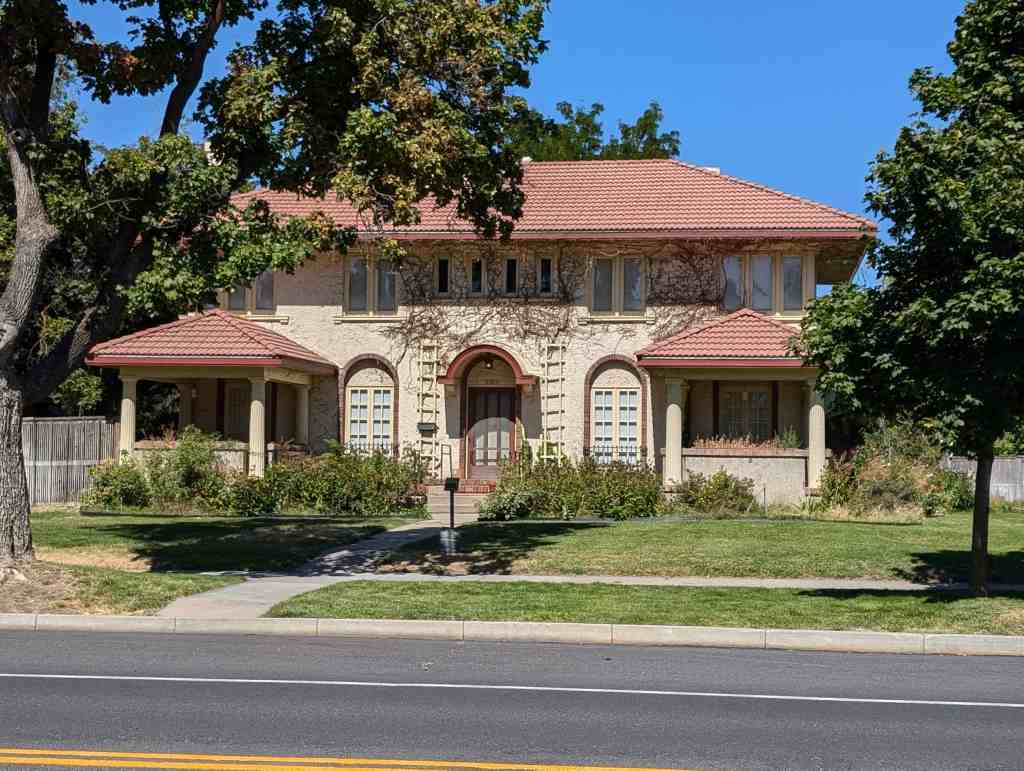
This Prairie-style home is a hip roof villa in the Spanish motif. It was built in 1915 for Julia Budge Nibley, Charles W. Nibley’s third wife. Nibley served as a station master at the depot and was an entrepreneur in early Logan.
The two-story home has stucco walls, strong horizontal symmetry, gently slopping hip roofs, low proportions, heavyset chimneys, sheltering overhangs, and low outreaching terraces that are typically Prairie-style, but the detailing makes it unique and more reminiscent of Classical and Spanish Revival styles. The fluted columns supporting the two front porticoes are Classical and have Doric capitals. A Spanish motif is portrayed by the red tile roof, an arched roof canopy above the front door, French doors used as windows, and openings outlined by brick arches. A garage was added in the 1960s but otherwise the exterior is largely unaltered. The interior was remodeled in the 1930s, again in the 1960s, and returned to its original period style in 1996.
The home was designed by Salt Lake architects Pope and Burton, who studied in Chicago and helped bring the Arts and Crafts style. They designed few residences, and even fewer remain. This house led the break from elaborate Victorian homes and established the Arts and Crafts style, particularly bungalows with Prairie influence, as the preferred homes in Utah. This house is historically important because it represents one of the best and earliest examples of the Chicago school (Commercial style) in the state of Utah.*
Built in 1911, this house was first occupied by Elias and Agnes Beckstrand. Elias was an engineering professor at the university and was appointed head of the department. He authored several works in this field and served as the consulting engineer for Utah Copper and the Utah State Road Commission.
The Ophir Town Hall, constructed in the early 1870s, is significant architecturally and historically as one of only three remaining nineteenth century mining town city halls in Utah. Mining proved of signal importance in the transition of Utah’s economy from an agrarian base to one more diversified, attracting numerous non-Mormon entreprenures and laborers. This transition began to occur in the late 1860s when the transcontinental railroad (1869) made commercial mining in Utah a profitable enterprise. Ophir, located some fifty miles southwest of Salt Lake City, numbered among the first mining districts established, and its Town Hall is the oldest remaining of its type in Utah. Other extant city halls from this initial period of mining activity are the Park City City Hall, 1884 (Park City Main Street Historic District, Summit Co. Utah – National Register), and the Eureka City Hall, 1899 (Eureka Historic District, Tintic Mining District, MRA, Juab County, Utah – National Register). The Ophir structure, however, remains architecturally unique as a type because in comparison it is a frame false-fronted building, whereas the other two are more substantial brick structures, reflecting the continued prosperity and growth of Park City and Eureka after the initial boom years of the 1870s and 1880s. The site was documented in 1967 as part of the Historic American Buildings Survey.
Ophir Town Hall is located next to the Ophir Fire Station in Ophir, Utah and was added to the National Register of Historic Places (#83003193) on June 9, 1983.
Mining for precious metals began in Utah with the arrival of the U.S. Military in 1862. Under Colonel Patrick E. Connor, known as the “father” of mining in Utah, the California Volunteers, stationed at Ft. Douglas in Salt Lake City, prospected the mountain ranges of the Salt Lake Valley. These men were experienced miners from the California gold fields, and under their guidance mining districts were opened in the Utah Territory in the 1860s. However, the effective commercial mining of minerals waited until 1869 when the Transcontinental Railroad joined at Promontory, Utah to make transportation of ores more economical and profitable.
In June, 1864 soldiers from Ft. Douglas organized the Rush Valley Mining District, some forty miles southwest of Salt Lake City; and in 1870, the Ophir District was separated and organized under its own right.* The Ophir District numbered among the initial incorporated mining areas in the Utah Territory. In fact, East Canyon, or Ophir Canyon, proved to be the first “significant” find of silver-lead ore made by Connor’s soldiers.
During the summer of 1870, A. N. Moore laid-out the townsite of Ophir, which is nestled in a canyon on the western slope of the Oquirrh Mountains southwest of Salt Lake City in Tooele County. Here, mining activity burgeoned, primarily after horn silver was found on Silverado Hill in 1870, and excitement extended until 1874. By April, 1871, the town was referred to as Ophir City, and touted as “flourishing and rapidly increasing.” In May, 1871 “plats, statements and necessary papers” had been filed at the Tooele County Recorder’s office, “so as to comply with the law of Congress of 1864-5, to locate the town for the benefit of lot holders and owners. ” Thus, the Ophir Town Hall was probably constructed sometime between 1870 and 1872; and by City. 1874, the hall was listed in the Sloan, Gazetteer of Utah and Salt Lake City.
The Ophir Town Hall fits into a general pattern of mining town devleopment. By 1870 the area had passed from a mining settlement to a camp, where the population grew and mineral strikes became more significant. As such, the town hall was constructed of wood, and served as offices, a meeting place, fire station, and jail. The false-fronted facade was unadorned, reflecting the utility of construction. A belfry, perched on the ridge of the gable roof near the front of the building, rang with the sound of fire. A lower level was constructed as the jail, with concrete walls and floors adding to security.
Ophir developed, with peak activity in 1872, 1873, and 1874, but then gradually began to decline. The city was moving to the “town” phase of development, but dwindling mining activity cut short its rise to a regional center as had occurred in the towns of Park City and Eureka. Thus, the frame town hall remains a symbol of the transition from settlement to camp, but not to the more substantial town phase.
Despite Ophir’s lack of growth to a district economic center, the town remains. Labeled as a “ghost town,” its various residents today dispute that observation. The Town Hall remains –the only one of its type in Utah– as a most visible symbol of Ophir’s past, and recent restoration activities during the 1970s have illustrated the community’s commitment in keeping its Town Hall the center of activity and pride.
The Ophir Town Hall is a two story rectangular structure 26 feet 5 inches by 24 feet 6 inches, and forms a combination town office, fire station, and jail. The false fronted frame structure is constructed of horizontal clapboard siding, 6 inches wide, with a belfry situated on the gable ridge of the roof near the front of the building. The main level is divided into three rooms which include a meeting hall, fire department, and storage room for fire fighting equipment. The lower level, or basement, is constructed of concrete and formed the foundation and jail, with each of two cells having one window.
The wood shingle roof was covered with galvanized corrugated sheet steel in the 1970s, and the clapboard siding treated with an oil coating. The building remains basically sound, and in much the same appearance as it did originally.
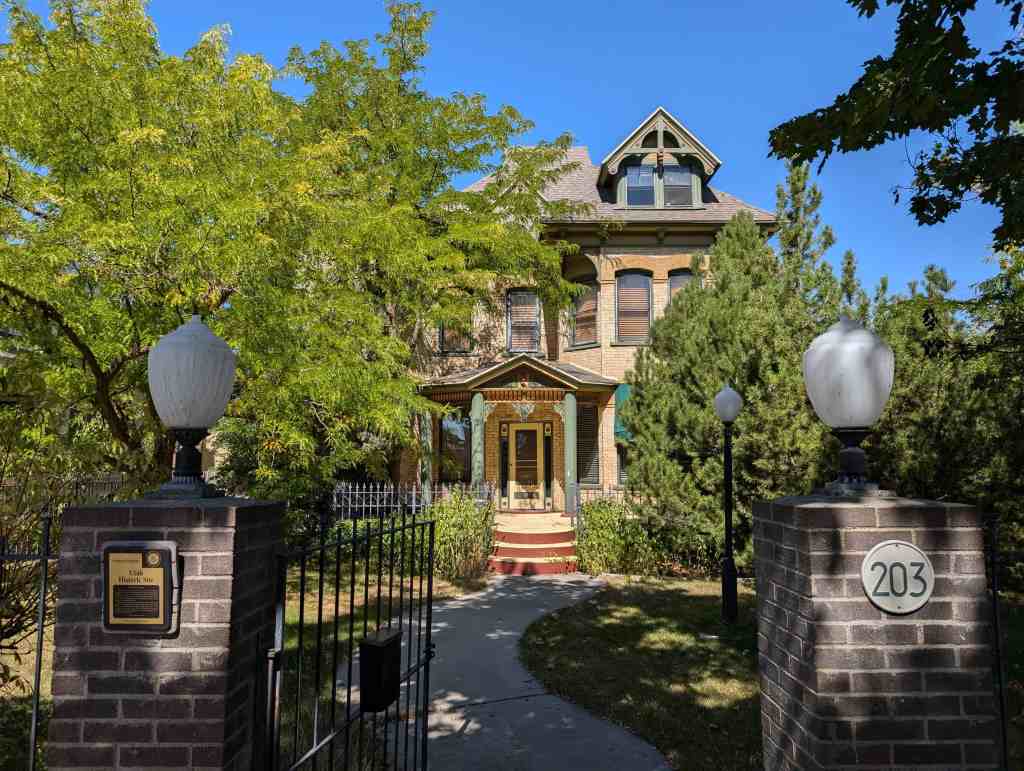
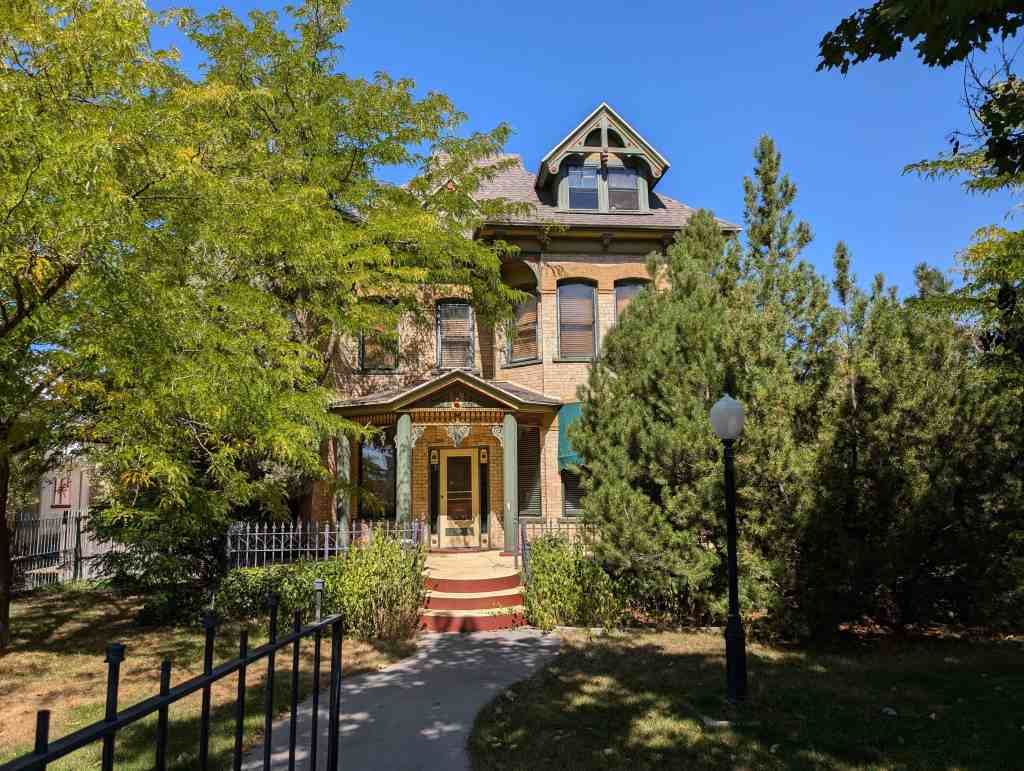
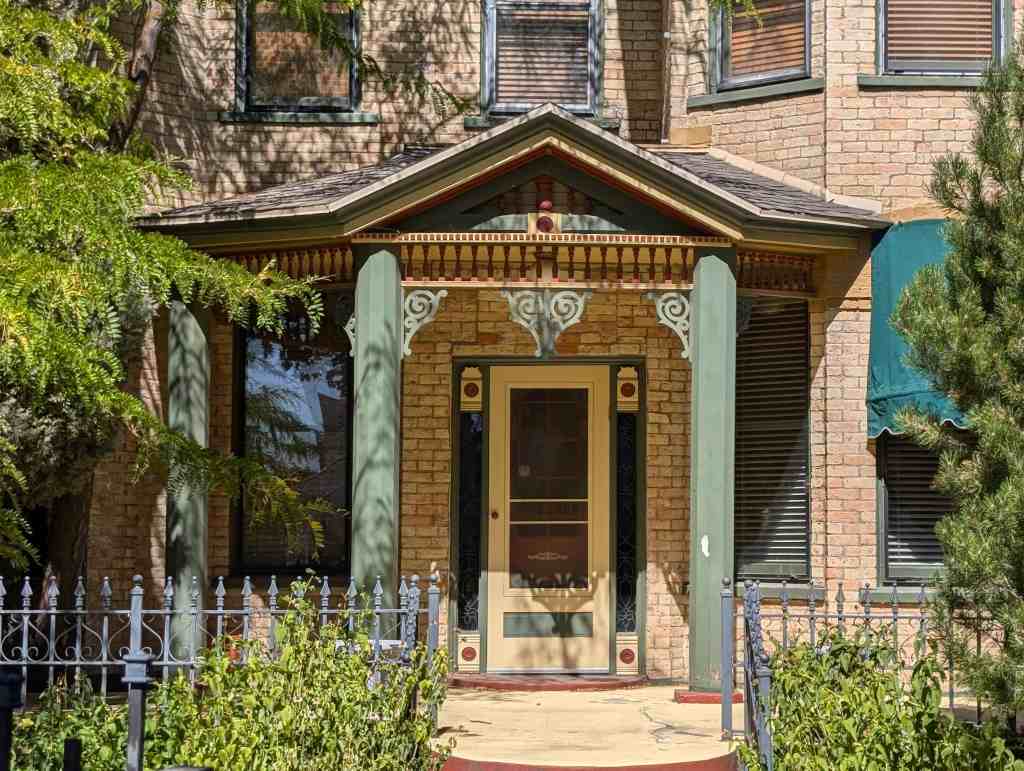
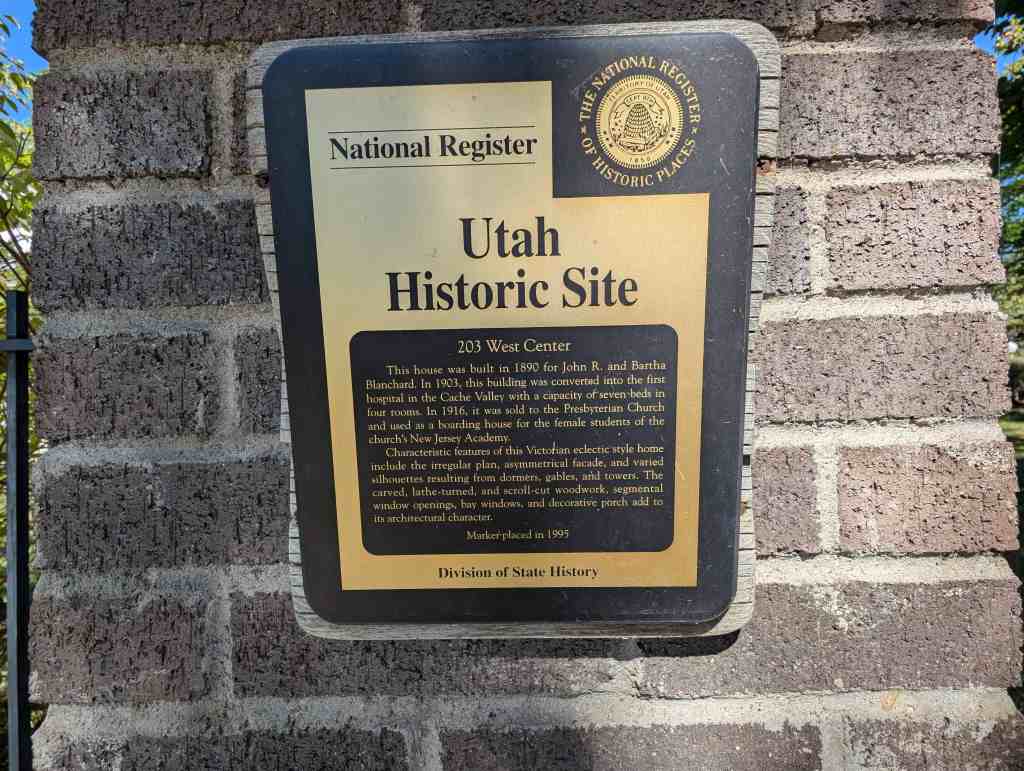
This house was built in 1890 for John R. and Bartha Blanchard. In 1903, this building was converted into the first hospital in the Cache Valley with a capacity of seven beds in four rooms. In 1916, it was sold to the Presbyterian Church and used as a boarding house for the female students of the church’s New Jersey Academy.
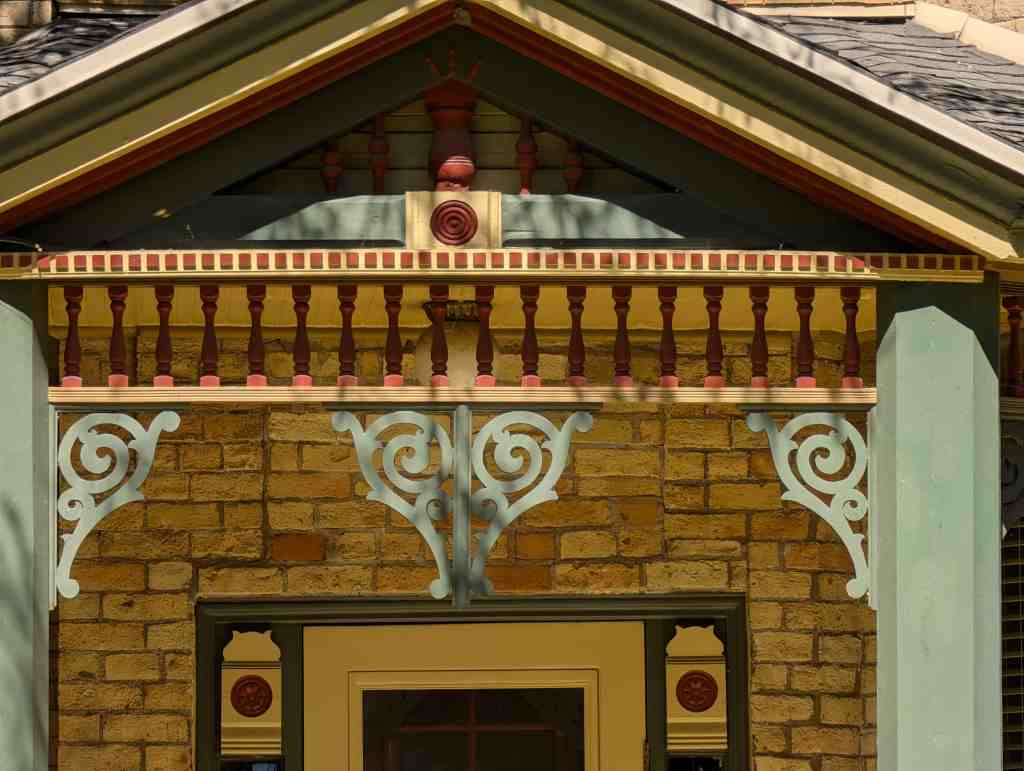
Characteristic features of this Victorian eclectic style home include the irregular plan, asymmetrical facade, and varied silhouettes resulting from dormers, gables, and towers. The carved, lathe-turned, and scroll-cut woodwork, segmental window openings, bay windows, and decorative porch add to its architectural character.
John R. Blanchard built this home in 1890. It was originally used as a residence and boarding house until 1903, when it became the first hospital in Cache Valley. In 1916 it was sold to the Presbyterian Church, which used it as a boarding house for the New Jersey Academy, one of the first non-Mormon schools in the valley. The home has been used as a dormitory, sorority house, and later sectioned into apartments. In 1977 it was converted back into a single family home. The house characterizes the Stick style, which is a Victorian sub-style with tall proportions and steep roofs. The eaves and roof gable ends are embellished by Eastlake detailed framing.*
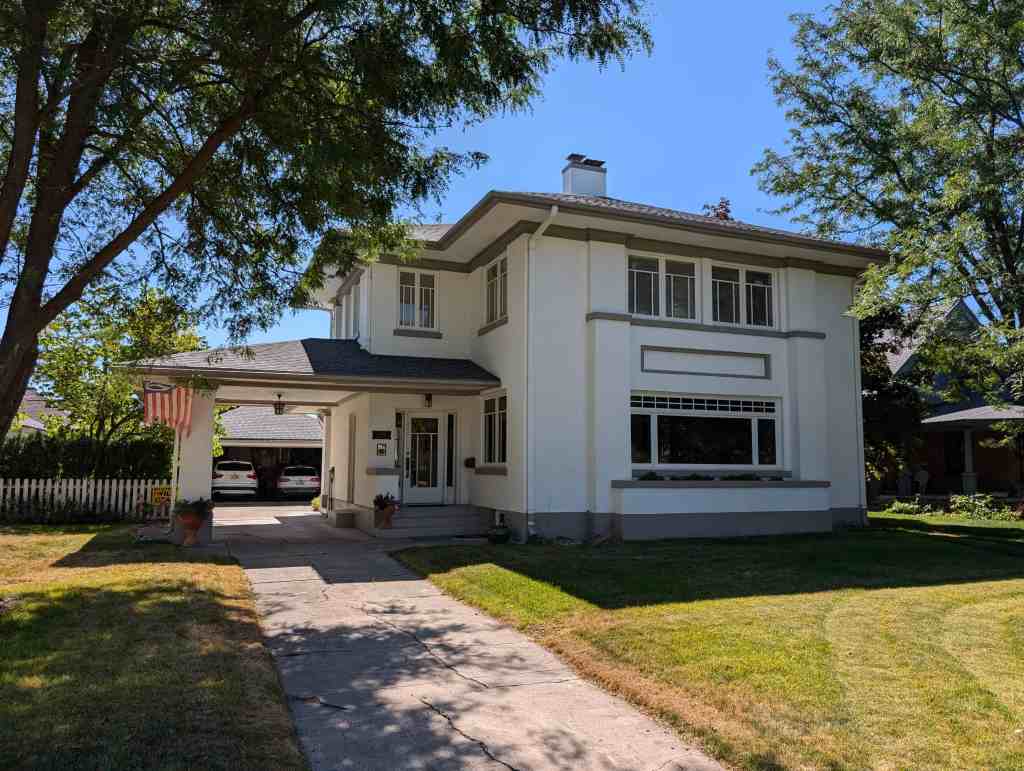
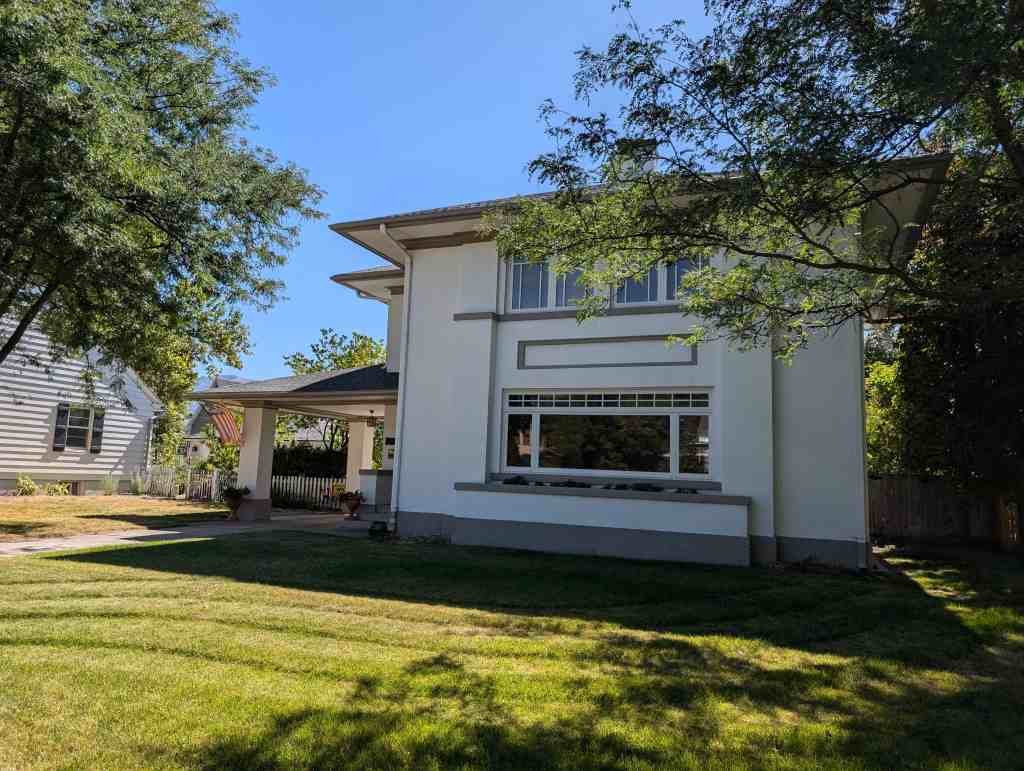
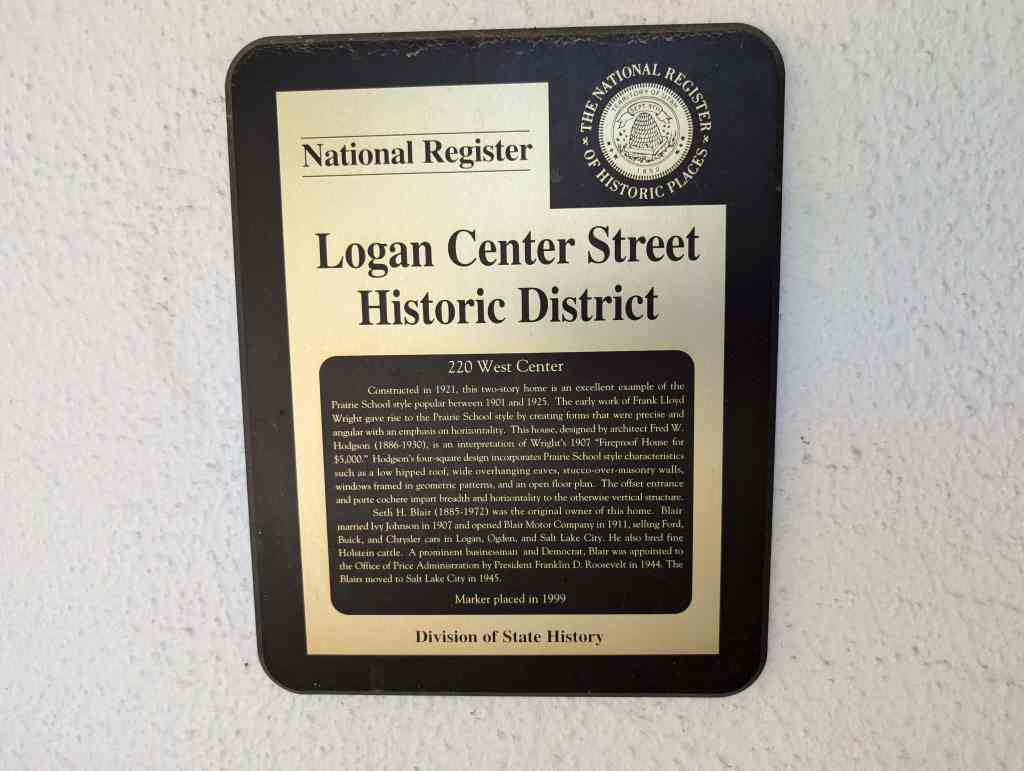
Constructed in 1921, this two-story home is an excellent example of the Prairie School style popular between 1901 and 1925. The early work of Frank Lloyd Wright gave rise to the Prairie School style by creating forms that were precise and angular with an emphasis on horizontality. This house, designed by architect Fred W. Hodgson (1886-1930), is an interpretation of Wright’s 1907 “Fireproof House for $5,000.” Hodgson’s four-square design incorporates Prairie School style characteristics such as a low hipped roof, wide overhanging eaves, stucco-over-masonry walls, windows framed in geometric patterns, and an open floor plan. The offset entrance and porte cochere impart breadth and horizontality to the otherwise vertical structure.
Seth H. Blair (1885-1972) was the original owner of this home. Blair married Ivy Johnson in 1907 and opened Blair Motor Company in 1911, selling Ford, Buick, and Chrysler cars in Logan, Ogden, and Salt Lake City. He also bred fine Holstein cattle. A prominent businessman and Democrat, Blair was appointed to the Office of Price Administration by President Franklin D. Roosevelt in 1944. The Blairs moved to Salt Lake City in 1945.
This two-story home constructed in 1921 is an excellent example of the Prairie School style popular between 1901 and 1925. The early work of Frank Lloyd Wright gave rise to this style by creating forms that were precise and angular with an emphasis on the horizontal. Designed by architect Fred W. Hodgson, this home is an interpretation of Wright’s 1907 “Fireproof House for $5,000.” The foursquare design incorporates Prairie School characteristics: low-hipped roof, wide overhanging eaves, stucco-over-masonry walls, windows framed in geometric patterns, and an open floor plan. The offset entrance and porte cochere (porch under which a carriage can pass) impart breadth and add horizontal lines to the otherwise upright structure.
Seth H. Blair (1885-1972) was the original owner of the home. He opened Blair Motor Company in 1911 and sold Ford, Buick, and Chrysler cars in Logan, Ogden, and Salt Lake City. Blair was recognized by the Utah Automobile Dealers Association as founder of the oldest continuous automobile dealership in the state. He also bred fine Holstein cattle.*
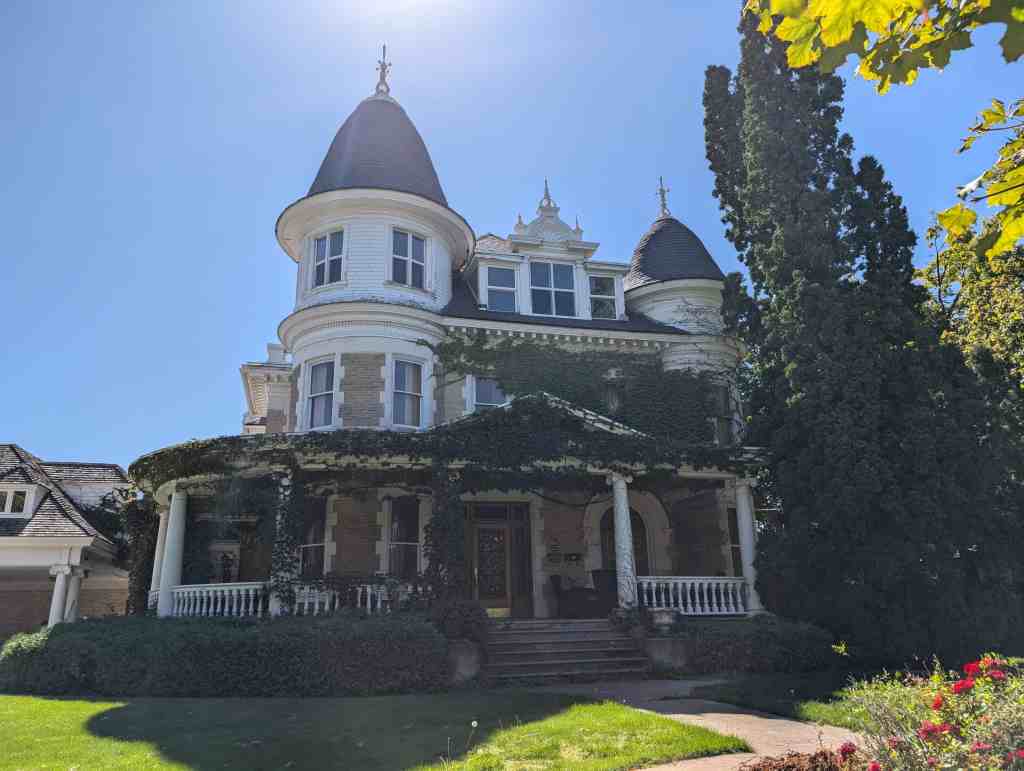
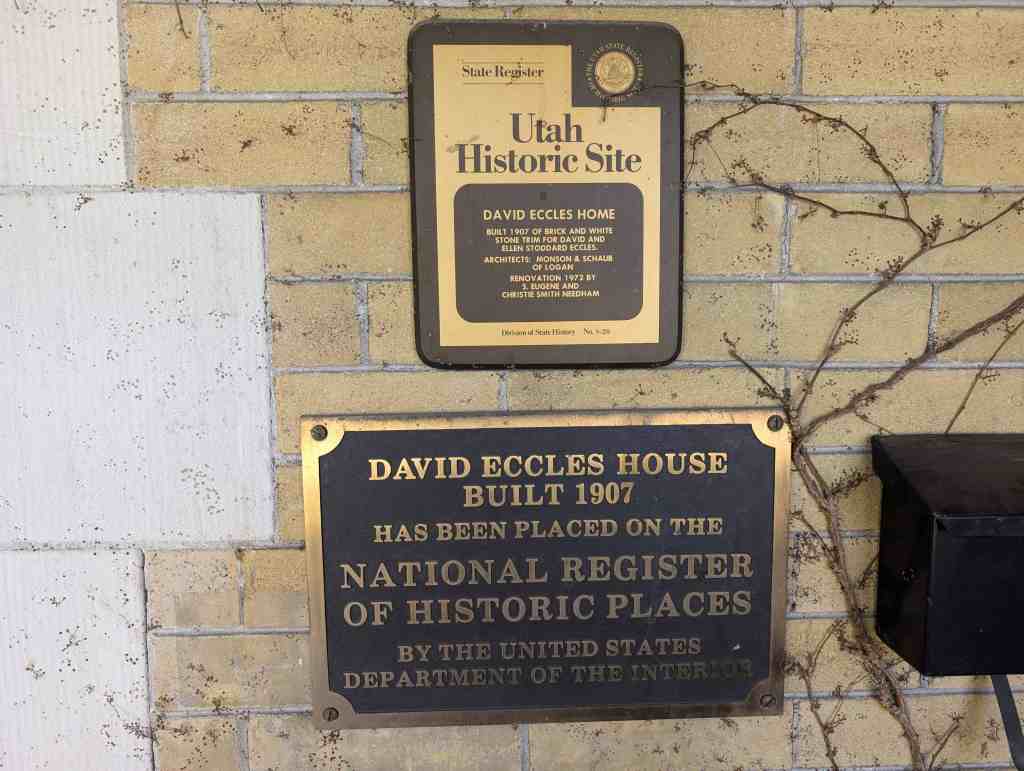
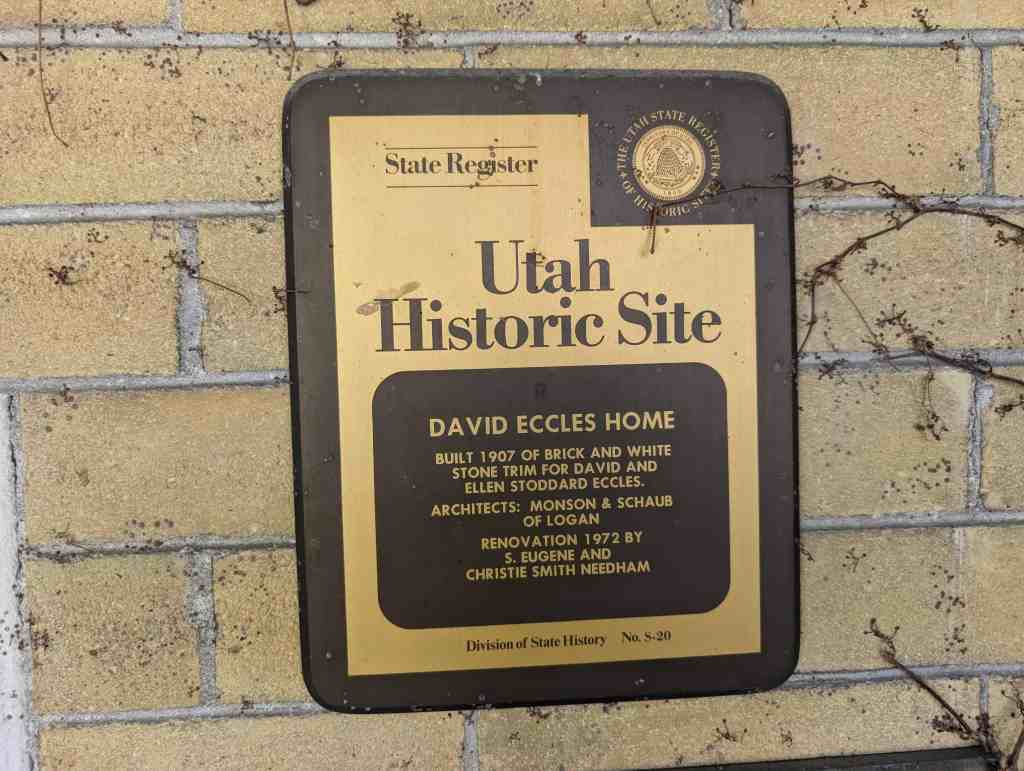
Built 1907 of brick and white stone trim for David and Ellen Stoddard Eccles.
Architects: Monson & Schaub of Logan Renovation: 1972 by S. Eugene and Christie Smith Needham
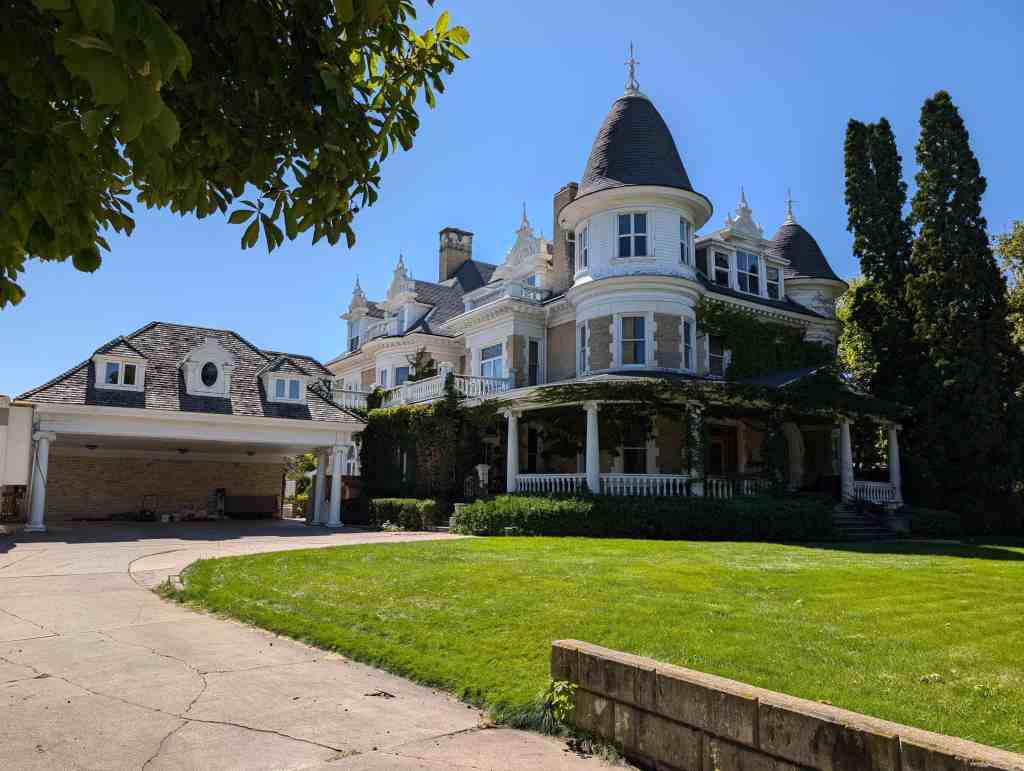
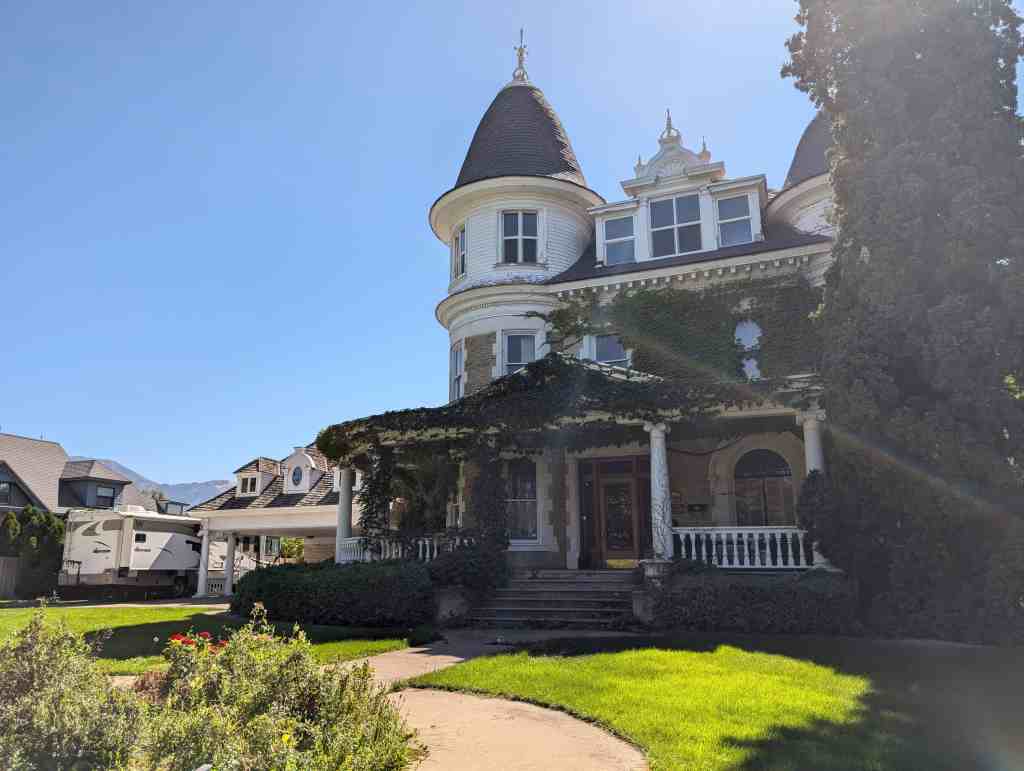
The David Eccles Home is located at 250 West Center Street in the Logan Center Street Historic District in Logan, Utah, it was added to the National Register of Historic Places (#76001811) on July 30, 1976.
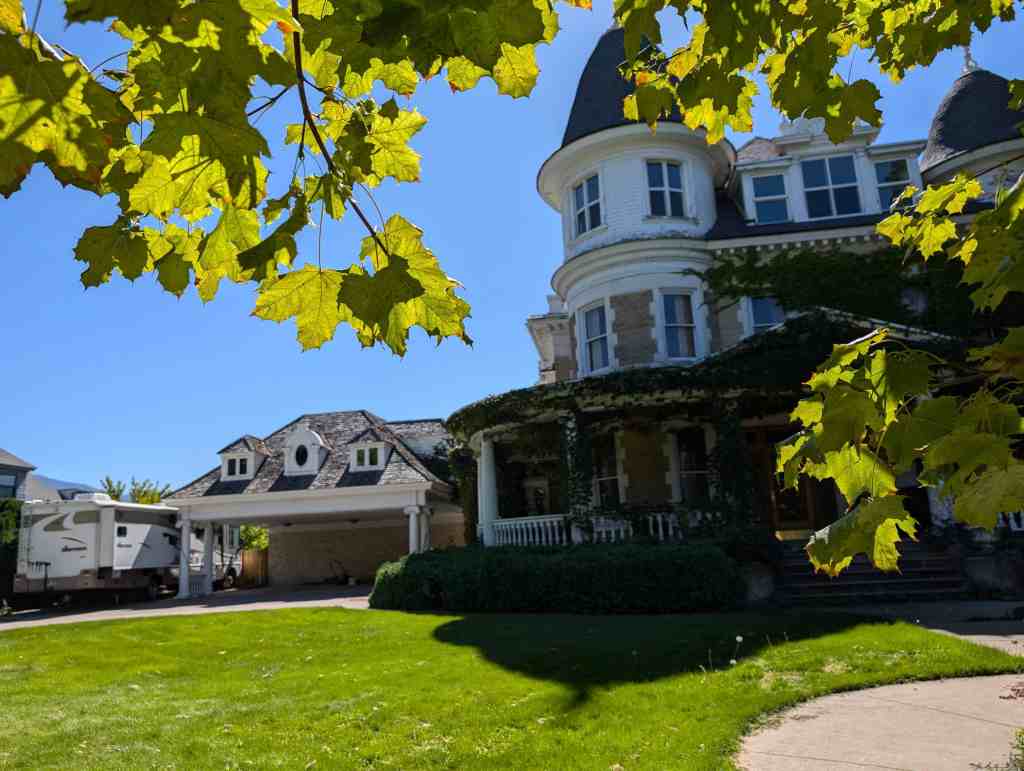
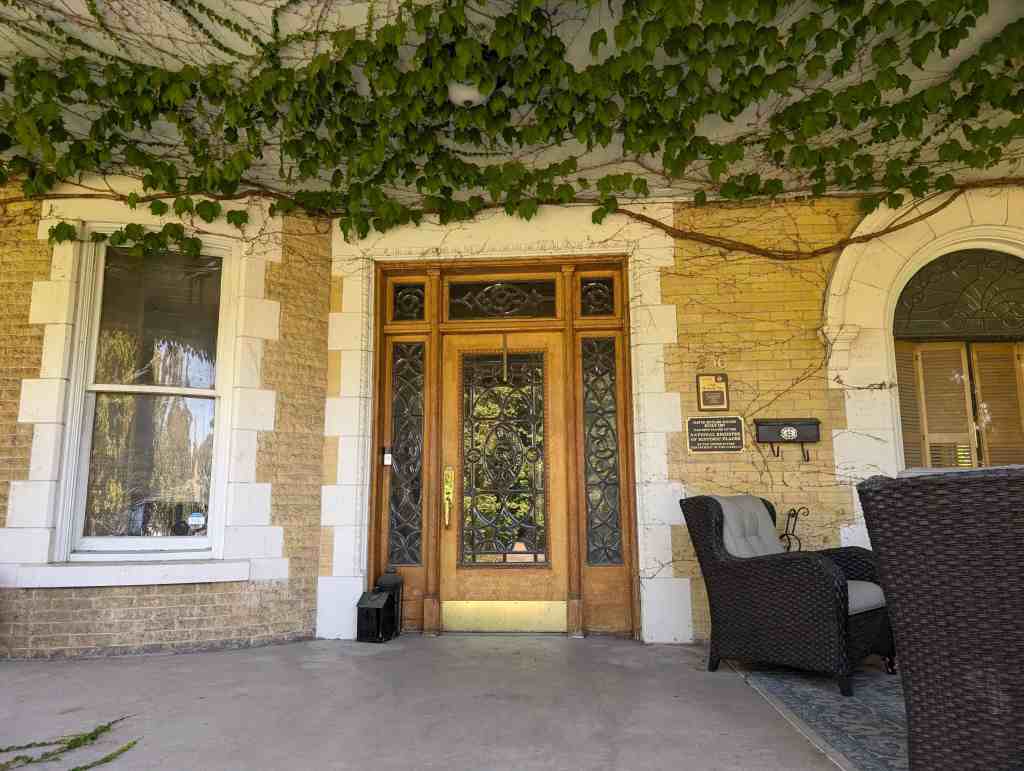
David Eccles built this home in 1907 for his second wife, Ellen Stoddard. It has 24 rooms and 11,000 square feet of living space. Emigrating from Scotland with his family in 1863, David Eccles became successful with interests in sugar, lumber, coal, and banking. The architects for the house were J. Monson and Karl Schaub. The style includes late Victorian, Chateauesque, and Neoclassical elements. Two large turrets and colonnades and a neoclassical porch dominate the façade of the beautiful structure. Of particular interest is the scrollwork on the front porch and the embossed abbreviation “D.E.” for David Eccles.
Throughout the house, decorative oak woodwork is prominent. Other features include 19 cut glass windows, detailed plaster cornice work, a large archway entrance to the living room, and hardwood floors. The house has been a university dormitory and fraternity and sorority house. Christie and S. Eugene Needham purchased it in 1970 and their renovation included adding a carport, a children’s play area, a formal garden, an art studio, and bedrooms.*
The David Eccles home represents several important themes in Utah and American history. As a poor emigrant from Scotland, the home symbolizes the successful business career of David Eccles and the important contribution he made to the economic development of the West. As the home of David Eccles’ second family, it is a unique part of the Mormon polygamy story. The home f s construction coincided with the end of the polygamy controversy after David Eccles became convinced he would be able to maintain both families in Utah without any interference. The home of Marriner Eccles during his last boyhood years, the site is also an important part in the history of this important figure in America’s economic history.
Architecturally the David Eccles residence represents the finer achievements of architects and builders responsible for the construction of the many late-Victorian period homes in the West Center Street area of Logan. The home is perhaps the best surviving residence designed by Logan architects Joseph Monson and Karl C. Schaub, both of whom were distinguished in their careers.
The David Eccles Home in Logan was constructed in 1907 at a reported cost of $75,000. The architects were Joseph Monson and Karl C. Schaub. Born May 12, 1849, near Glasgow, Scotland, David Eccles was forced to begin his business career at an early age when his father, a wood turner by trade, suffered almost a complete loss of sight from double cataracts on his eyes. Supplied with kitchen utensils made by his father and resin sticks used to ignite coal fires, the eleven year old David journeyed to neighboring towns to peddle his wares. In 1863, at the age of fourteen, David Eccles and his family emigrated to Utah with help from the LDS Church Perpetual Emigration Fund. After working in Utah and Oregon sawmills, and the Almy Wyoming coal mine, David took a contract in 1872 to supply logs to a portable sawmill. This venture led to further investment in the lumber industry first in Utah then Idaho, and by 1887 in Oregon. His success in the lumber industry made possible other investments in railroads, beet sugar refineries, food processing enterprises, construction, coal, land, livestock, banks, and insurance companies. After his death in 1912, his estate was valued at over six million dollars. During his business career he had founded 54 different enterprises. Because of his respect among both the Mormon and non-Mormon business communities, he was a leader in the secularization of business in the Mormon cultural region. His biographer, Leonard Arrington wrote:
To a poorly educated person from a family with no savings or social status, the only way out of poverty was hard work and careful use of time and resources. Eccles therefore concentrated his efforts toward the goal of accumulation. He did not expend his energies in “church activities,” nor in striving for social recognition, nor in unproductive political debate, nor in the pursuit of pleasure. Every moment, every ounce of energy, every expenditure had to count toward the goal of accumulation and profit. This was not a driving preoccupation but a a pattern of life he knew was right. He was neither tense nor humorless; he enjoyed his work and his endeavors to turn a profit. He worked with gusto, relished the attempt to make business succeed, found pleasure in investing in new enterprises. But he was careful, prudent, and shrewd. This was habitual with him and not just a “show” to induce a spirit of economy among his employees. Leonard J. Arrington, David Eccles, pp. 126-127.
In keeping with the standard set by prominent men of good standing in the Mormon Church before 1890, David Eccles married two women. His first wife and her family lived in Ogden and their home, now known as the Bertha Eccles Art Center has been listed on the National Register of Historic Places.
David married his first wife, Bertha Jensen, in 1875. Ten years later, in 1885, he married Ellen Stoddard a young girl eighteen years of age. Because of the pressure by federal officials to arrest Mormon men guilty of unlawful cohabitation, the marriage to Ellen was kept a secret. Ellen was well aware of the necessity for secrecy especially when her own father, a polygamist with four wives, was arrested and forced to spend several months in prison. During the late 1880’s, Eccles moved Ellen, her mother, sister and two brothers to North Powder, Oregon, near a sawmill built by John Stoddard, but then owned by his son-in-law David Eccles. In 1890, Ellen returned to her family in Logan where she gave birth to her first child, Marriner. With the fear of arrest for unlawful cohabitation still a threat to her husband, Ellen continued to keep her marriage a secret and while in Logan, carefully hung drying diapers under sheets on the clothesline in an effort to maintain her secret. Ellen remained in Utah and Southern Idaho until late 1894 when she returned to Oregon with her three children, Marriner born in 1890, Marie born in 1892, and Spencer born in 1894. Her father, a business associate of David Eccles in the lumber industry had made his home in Oregon and Ellen remained there until 1907. During her sojourn in Oregon, five more children were born.
After Ellen’s return to Logan in 1907, David’s relationship between his Ogden and Logan families settled into a comfortable routine. Leonard Arrington writes:
Eccles necessarily divided what time he had for domestic matters between his two families, so the responsibility for rearing their nine children necessarily fell to their mother Ellen. The oldest son of this family, Marriner, recalled, “she reared us all to share her own view of David as a man who was to be respected and loved, and not to be annoyed by noise and tumults on the occasions when he was home with us.” And his sister Nora concurred, adding that, even though Eccles kept unorthodox hours–in his later years he often came home as late as ten o’clock in the evening–her mother would attempt to have a full dinner for him, and a family of happy, if tired, children to greet him. The children loved to wait for his arrival. He would play games with them, such as dropping nickels and dimes on the sofa for them to find. When they would bring the lost coins to him, he would reply in his Scottish burr, “Losers weepers, finders keepers!” and laugh heartily. Leonard J. Arrington, David Eccles, p. 155. Marriner S. Eccles, Beckoning Frontiers: Public and Personal’ Recollections, (New York, 1951), p. 22.
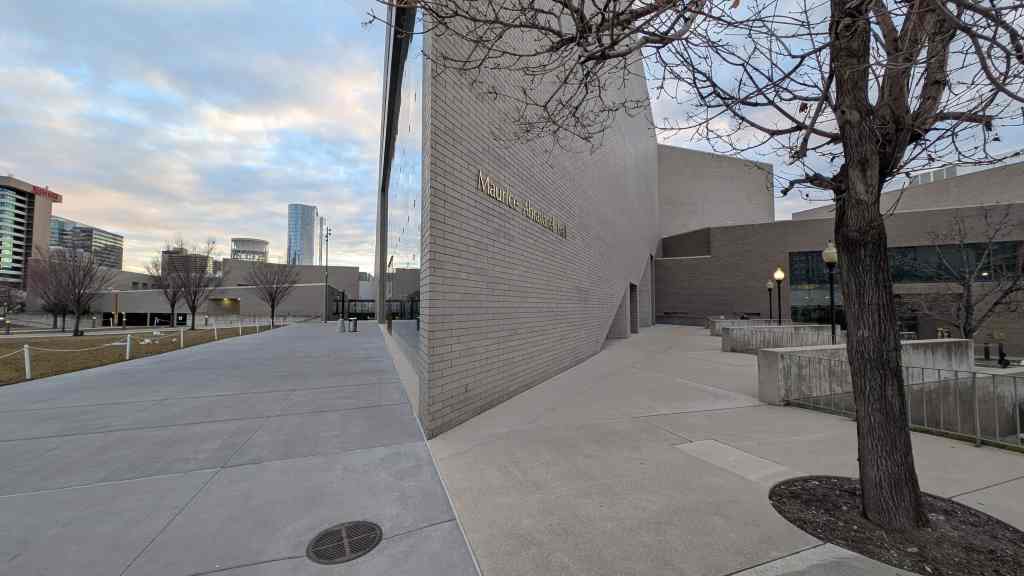
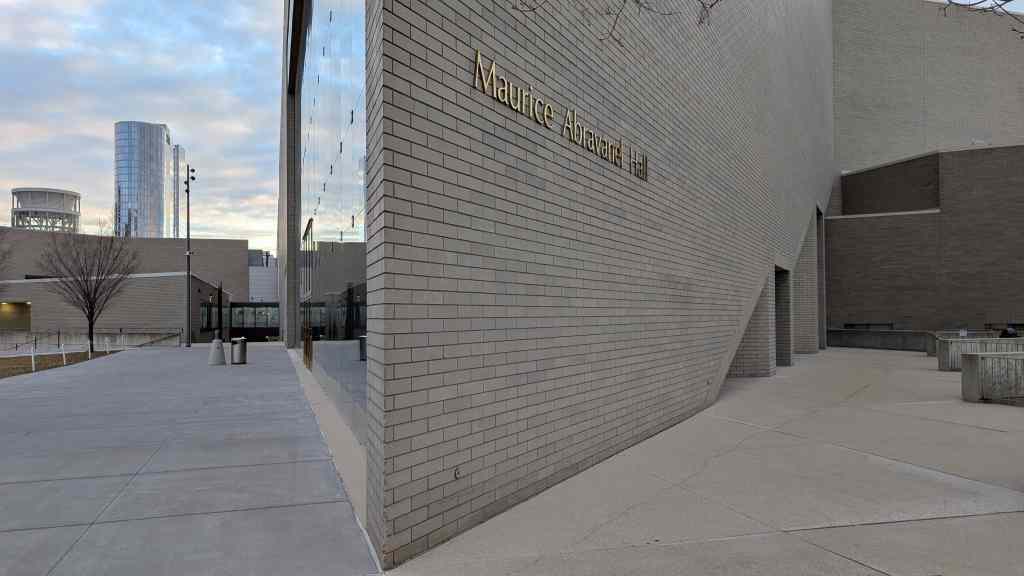
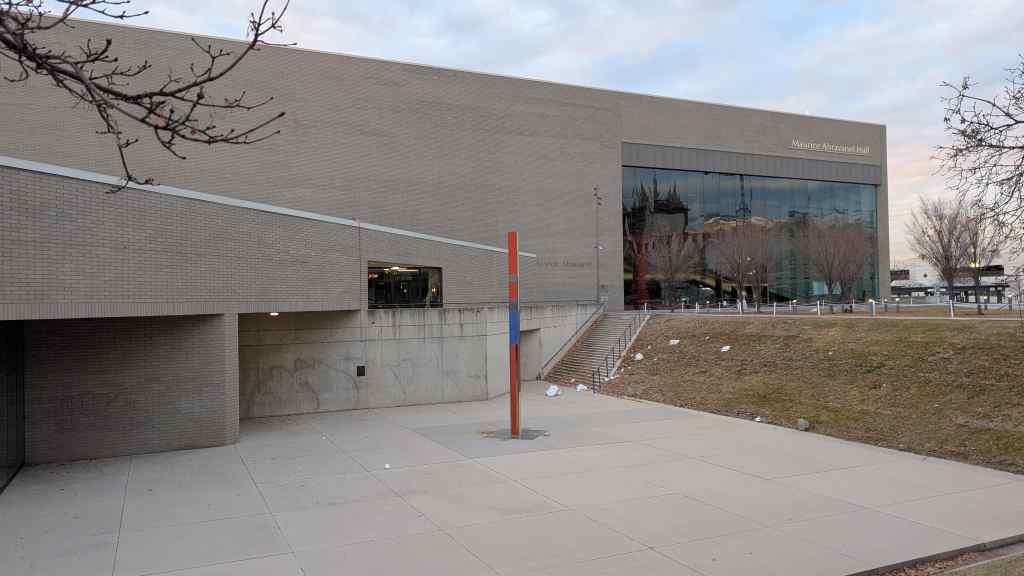
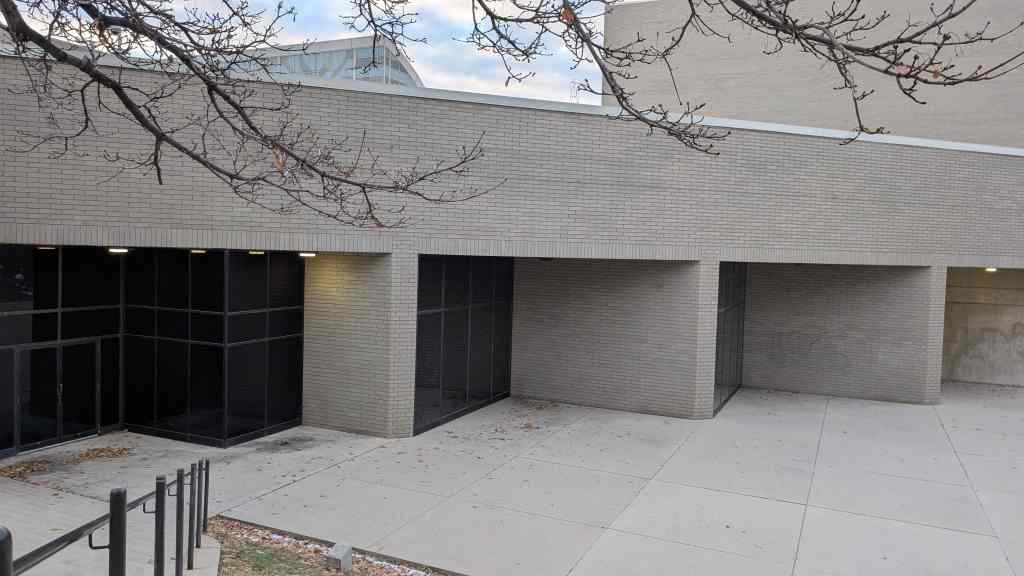
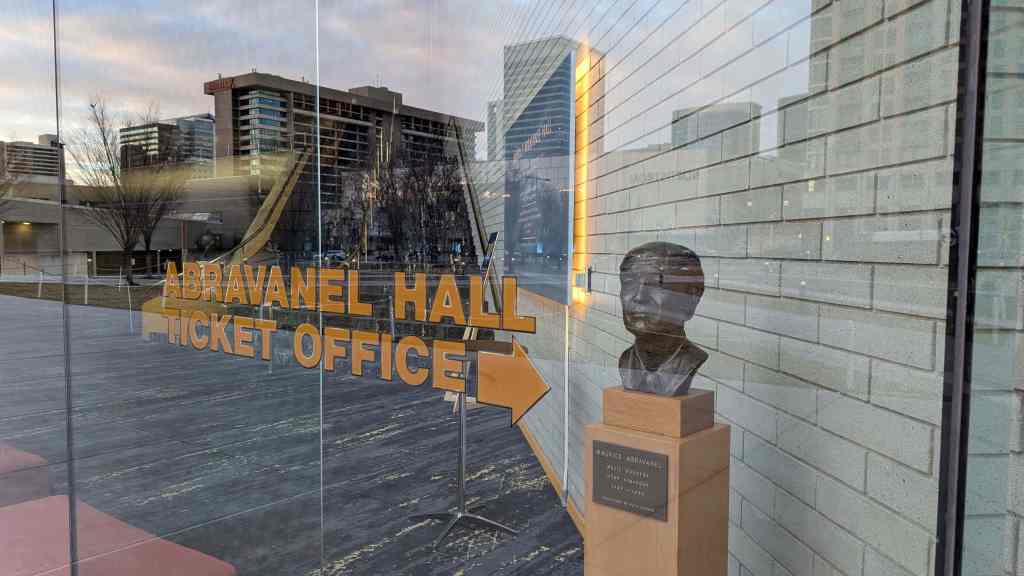
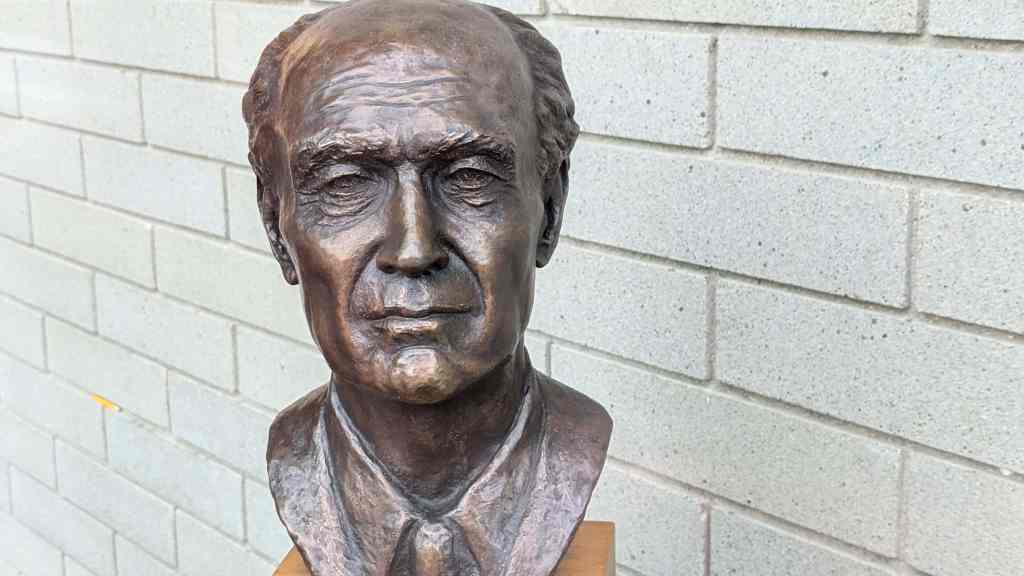
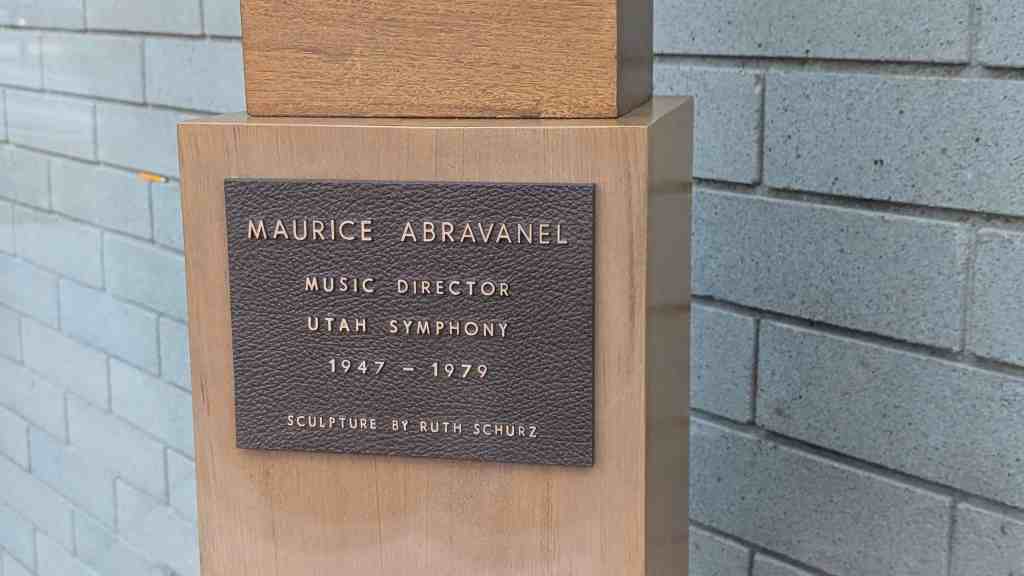
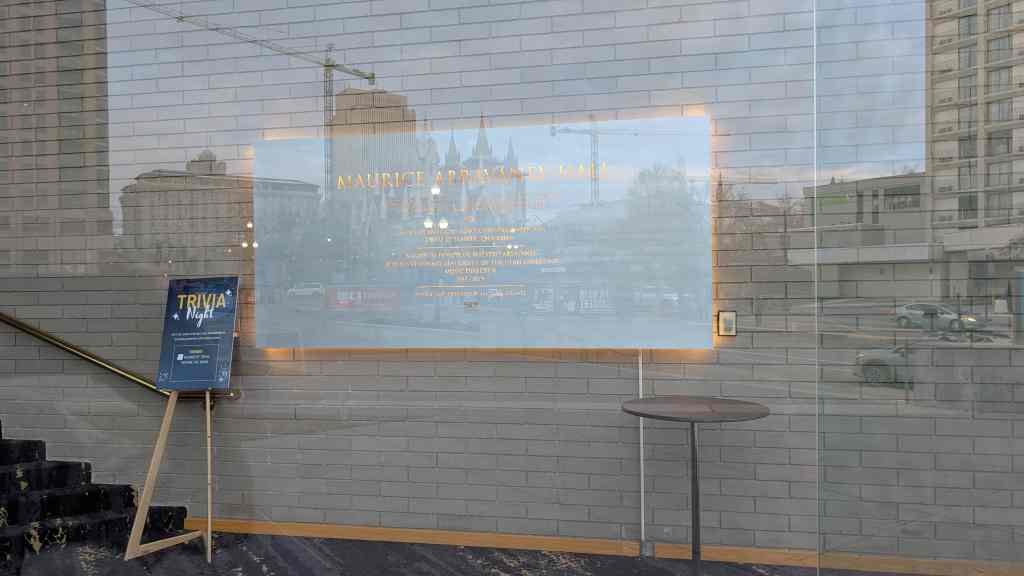
Symphony Hall / Abravanel Hall is located at 123 West South Temple (parcel is 20 South West Temple) in Salt Lake City, Utah, it was added to that National Register of Historic Places (#100011033) on November 6, 2024.
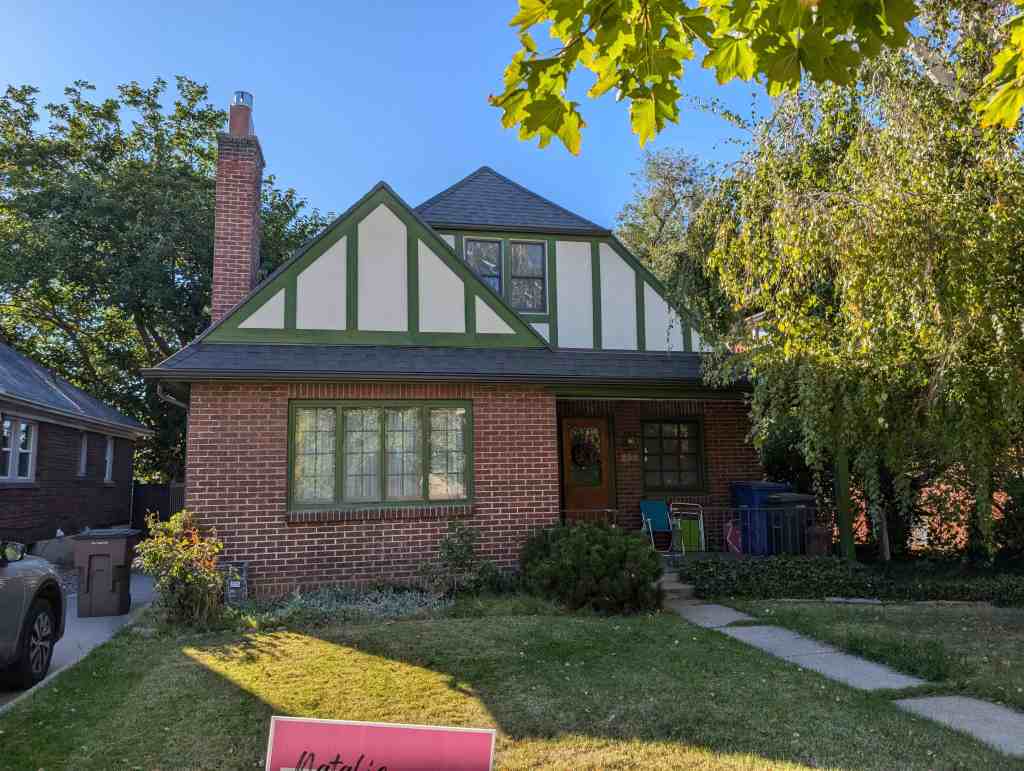
Leslie and Viola Paul constructed this house in 1923. Leslie was a physician and served on the volunteer clinical faculty of the U of U College of Medicine. He helped establish the Intermountain Red Cross Blood Bank and served on the board of the Odyssey House, a drug treatment center. In 1944 he was sent to Iran to serve as commanding officer of a U.S. Army field hospital.
mentioned in University Neighborhood Historic District: Dr. Leslie Paul (258 South Douglas) was a volunteer clinical faculty member at the University of Utah College of Medicine who helped establish the Intermountain Red Cross Blood Bank and served as commanding officer of a U.S. Army field hospital in Iran in 1944.